Comic Book Interiors: 100 Pages of Creative Freedom
Every great comic book starts with a spark—an idea for a character, a scene, a world. But translating that idea onto the page requires more than just talent; it requires a solid foundation. For many creators, the biggest hurdle isn't the story, but the structure. That's where the right design assets become invaluable. The Comic Book Templates Interior collection is precisely that: a practical toolkit designed to remove technical barriers and let your creative voice take center stage.
Beyond the Blank Page: What These Templates Offer
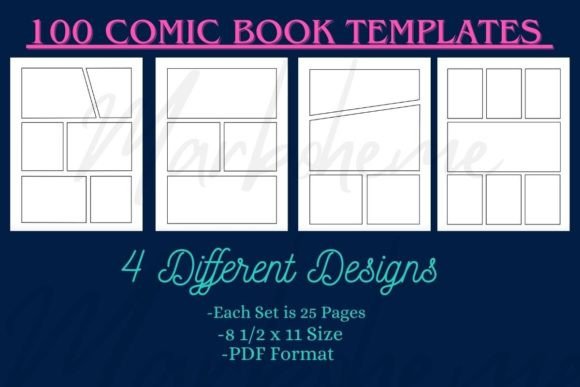
Forget generic, one-size-fits-all layouts. This collection provides four distinct template types, each with its own personality and purpose. Think of them as the serif font to your body text or the display font for your headlines—they are the silent partners that give your work shape and flow. The visual style is clean, professional, and intentionally neutral. It doesn't impose a specific aesthetic; instead, it provides a clear, balanced grid that guides the eye and maintains pacing. The overall appeal lies in its versatility. Whether you're crafting a gritty noir thriller or a vibrant superhero epic, the templates act as a reliable stage for your art.
The practical benefits are immediate. Delivered in high-quality PDF format, these files are ready for both digital and print workflows. The standard 8.5 x 11-inch size is a workhorse dimension, perfect for creating print-on-demand projects through platforms like Amazon KDP or for designing digital portfolios. The convenient packaging into 25-page packets is a thoughtful touch, making it simple to organize chapters or test different layouts without overwhelming your project files. This isn't just a download; it's a system for managing your creative process.
Strategic Applications for Creators and Businesses
The utility of the Comic Book Templates Interior extends far beyond traditional graphic novels. For designers and brand identity specialists, these templates offer a unique way to present narrative-driven case studies, brand stories, or product journeys. Imagine showcasing a client's rebrand not in a slide deck, but in a compelling visual narrative that engages stakeholders on a different level. The structured panels help maintain visual hierarchy, ensuring your message is communicated clearly and memorably.
Entrepreneurs and small business owners can leverage this creative font of visual storytelling for marketing. A short comic explaining a service, illustrating a customer testimonial, or breaking down a complex process can be a powerful social media graphics tool. It cuts through the noise of static images and text-heavy posts. The inherent readability of well-designed comic panels guides the viewer naturally from one point to the next, enhancing engagement and information retention.
For publishers and content creators, the templates streamline production. They provide a consistent framework for editorial design, ensuring that each page turn feels cohesive. This consistency is crucial for brand perception and professionalism. When you use a standardized template system, you're not just saving time—you're building a recognizable visual language that audiences will associate with quality. The font pairing possibilities are endless; you can match the clean lines of the panels with a bold handwritten font for dialogue or a crisp sans serif font for captions, tailoring the mood to your story.
Making It Work: Practical Guidance for Your Project
Choosing the right template from the four available is your first creative decision. Consider the pacing of your story. Do you need wide, cinematic panels for action sequences? Or tighter, intimate grids for dialogue-heavy scenes? Test a few pages with your sketches to see how the layout influences the rhythm of your narrative. This is where you evaluate the project fit—the template should serve your story, not constrain it.
Next, think about your final output. If your goal is Amazon KDP ready print books, the provided size is ideal. For digital-only projects, you have more flexibility to experiment with scaling. Always review the included styles. While the templates are minimalist, pay attention to the gutter widths and panel margins. These subtle details affect how the eye moves across the page and are critical for readability, especially in printed formats where binding can eat into the inner margins.
For those integrating this into a larger brand or publishing system, consider the commercial licensing implications. The "no watermarks" guarantee means the final product is yours to use and monetize, which is essential for commercial projects. Use the templates as a premium font equivalent for layout—invest in them to elevate the perceived value of your final product. The best results come from treating these templates not as a shortcut, but as a professional tool that requires your unique artistic input to truly shine. Your story is the soul; these templates are the skeleton that gives it form.
Ultimately, the power of the Comic Book Templates Interior lies in its ability to democratize a complex art form. It provides the modern typography of layout structure, allowing you to focus on what matters most: the characters, the plot, and the emotion you want to convey. From indie logo design projects that need a unique narrative touch to full-scale packaging design for a product line with a story, the applications are as limitless as your imagination. Start with the structure, and let your creativity build the world within it.